

New York Harbor dredging is foundational to the safe and efficient movement of commercial vessels, ferries, barges, and international cargo ships entering one of the most important ports on the East Coast. The harbor is a living, constantly shifting water system shaped by tides, storms, river flows, and continuous maritime traffic. As sediment accumulates, navigation channels narrow, water depths decrease, and clearance margins for ships become tighter. This creates operational risks and economic consequences for port operators, shippers, and the surrounding metropolitan region. The purpose of this blog is to explore the scientific, environmental, and engineering aspects of sedimentation control and to demonstrate how advanced strategies can make New York Harbor dredging more effective and sustainable.
Understanding the mechanics of sedimentation, along with the needs of port authorities, maritime carriers, and regulatory stakeholders, helps build a comprehensive approach to harbor maintenance. As the maritime transportation landscape evolves, the demands on the harbor increase. The volume of trade passing through the Port of New York and New Jersey has grown substantially, necessitating channel-depth management and sediment removal to be executed with both precision and foresight. New York Dredge Services has played a significant role in shaping these practices by providing technologies and solutions tailored to the region’s complex hydrodynamics.
Sedimentation Dynamics in New York Harbor
Sources and Patterns of Sedimentation
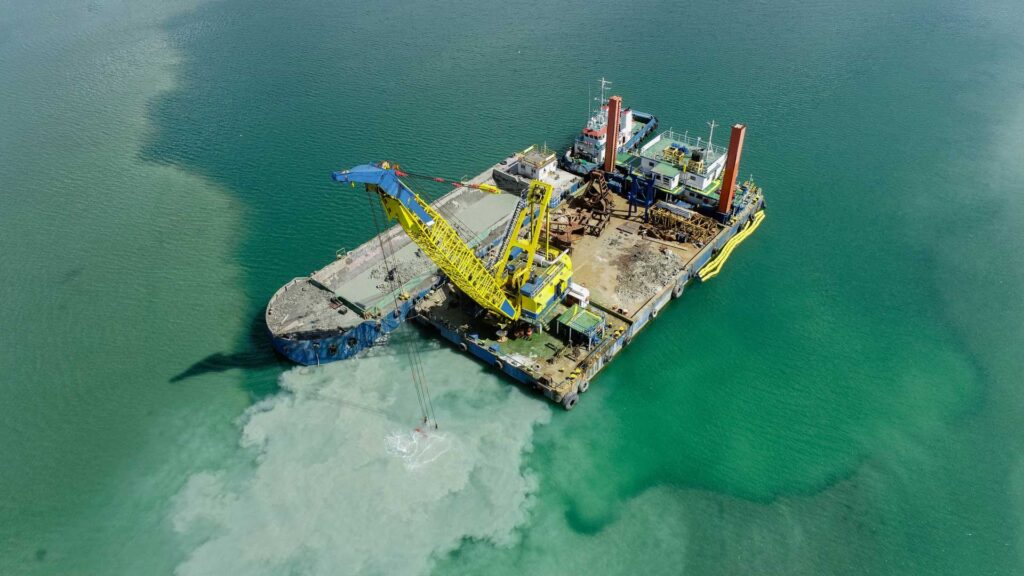
Sediment accumulation in New York Harbor originates from several natural and anthropogenic forces. The Hudson River contributes a substantial amount of fine silts and clays, particularly during seasonal peaks when upstream snowmelt or heavy rainfall increases river discharge. Ocean currents entering through the Verrazzano Narrows carry sand and heavier particles toward the Upper Bay, creating interference with ship channels. Over time, these materials settle in areas such as the Ambrose Channel, Anchorage Channel, and Kill Van Kull.
Urban influences also shape the need for dredging in New York Harbor. Stormwater outfalls along Manhattan, Brooklyn, and Jersey City wash suspended solids into the harbor. Construction activity, shoreline erosion, and infrastructure work in places such as Red Hook, Bayonne, and Staten Island further contribute to sedimentation. These processes overlap and vary with tidal cycles, making sedimentation an ongoing, dynamic challenge rather than a periodic one.
High-Deposition Zones and Their Impact
Some zones experience accelerated sedimentation because of their hydrodynamic characteristics. Kill Van Kull, for instance, is one of the busiest commercial waterways in the harbor. Strong currents influenced by tidal exchange stir up sediments, which then settle in navigational paths. Ambrose Channel, the deepwater entrance for large container vessels, often accumulates sand deposits that reduce draft capacity.
These recurrent accumulation patterns necessitate harbor maintenance dredging. Left unmanaged, sediment can hinder vessel operations, reduce shipping efficiency, and increase the risk of grounding. Maritime operations in New York Harbor depend on timely sediment removal to maintain authorized depths.
The Importance of Harbor Maintenance Dredging in Regional Commerce
Protecting Navigational Depths
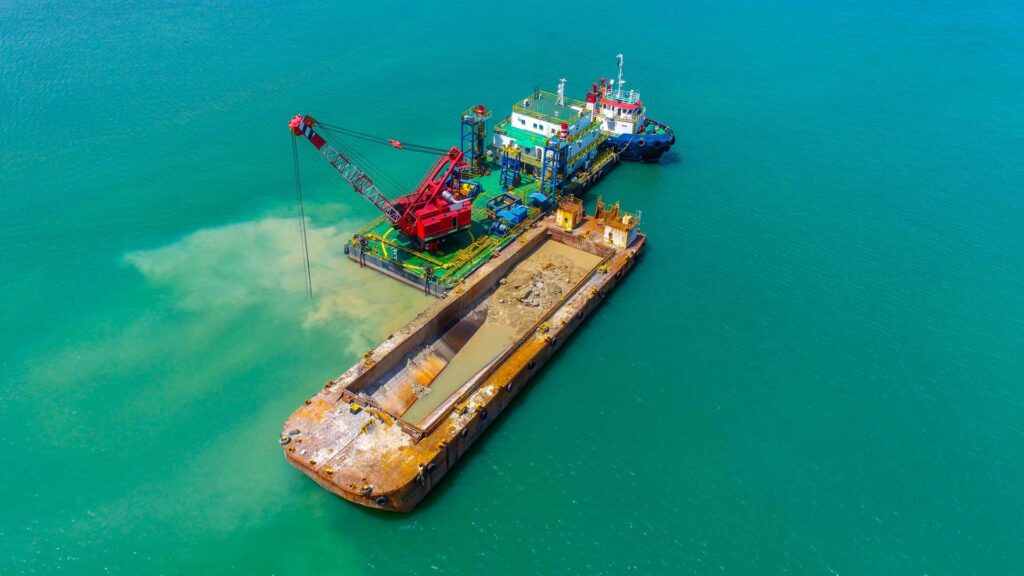
The economic significance of New York Harbor cannot be overstated. It serves millions of tons of cargo annually and supports extensive ferry routes, cruise lines, and commercial fleets. Maintaining appropriate channel depths is therefore crucial. Routine harbor maintenance dredging ensures that vessels with deeper drafts can move safely and without delay.
When sedimentation reduces depth, vessels must lighten cargo or wait for higher tides, both of which increase operational expenses. Shipping companies prefer ports with predictable transit conditions, making sustainable harbor sedimentation management vital to long-term competitiveness. Channel obstructions or siltation-related delays can ripple through supply chains, affecting warehouse scheduling, trucking operations, and overall port efficiency.
Climate Variables Affecting Sedimentation
Climate factors also influence the rate and behavior of sedimentation. Increased storm frequency and severity in the Northeast have intensified runoff and erosion. In addition, storm surges from Nor’easters transport coastal materials into the harbor. Tidal fluctuations combined with storm-driven currents redistribute these sediments across the channel floor. As climate variability shifts, the need for strategic, adaptive dredging of New York Harbor becomes increasingly critical.
Engineering Principles Behind Effective Harbor Sedimentation Management
Understanding Sediment Characteristics
Sediments in New York Harbor consist of a mixture of fine silts, clays, organic matter, sands, and occasional gravel. Engineers must analyze these materials to determine the appropriate dredging method. Fine silts often require hydraulic dredging because they are light and easily transported. Sands and mixed materials may benefit from mechanical dredging for efficiency and control.
A thorough understanding of sediment distribution is essential for the management of harbor sedimentation. This analysis enables dredging teams to develop a targeted approach that minimizes unnecessary disturbance while maximizing removal efficiency.
Surveying and Mapping Techniques
Hydrographic surveys underpin the dredging strategy. Modern approaches use multibeam sonar systems, sediment profilers, and current meters to develop accurate models of channel conditions. When applied continuously, these tools reveal patterns in sediment movement, helping engineers predict when and where sediment will accumulate next.
Predictive modeling is vital for scheduling harbor maintenance dredging. Engineers rely on these projections to determine the optimal dredging window, minimizing disruptions to maritime traffic while ensuring safe navigation conditions.

Decision-Making Based on Data and Hydrodynamics
Hydrodynamic modeling incorporates tidal cycles, river discharge, storm influences, and vessel movement patterns. This creates a detailed representation of how water and sediment interact. Engineers compare these findings with sediment core samples to calibrate predictions and refine dredging plans.
This data-driven approach improves the consistency and accuracy of New York Harbor dredging programs. It ensures that maintenance efforts focus on areas with the highest risk of siltation and the greatest impact on port operations.
Technical Strategies Used in New York Harbor Dredging
Hydraulic Dredging Methods
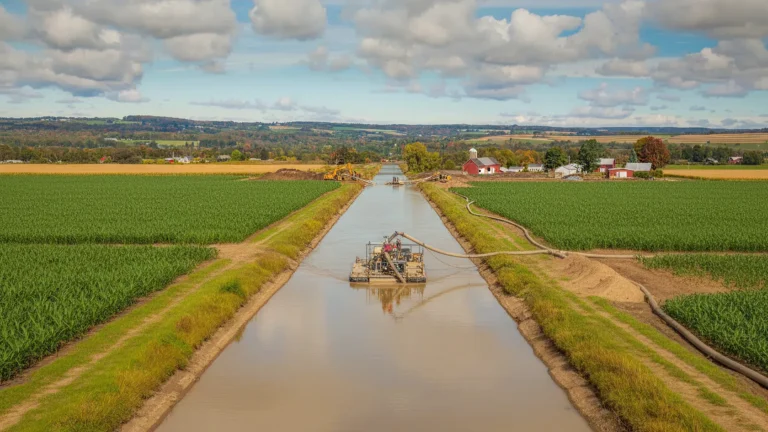
Hydraulic dredging is preferred for removing soft sediments, such as clay and silt. The dredge head breaks up the material, and pumps transport the slurry through a pipeline to designated disposal or processing sites. In New York Harbor, this method is particularly effective in broad, deep channels where continuous removal is required.
Hydraulic dredging is advantageous because it allows sustained sediment transport without relying heavily on barge movement. This becomes important in narrow areas where vessel crowding must be minimized. Such conditions occur frequently near Battery Park, Governors Island, and the Staten Island ferry lanes.
Mechanical Dredging for Complex Urban Environments
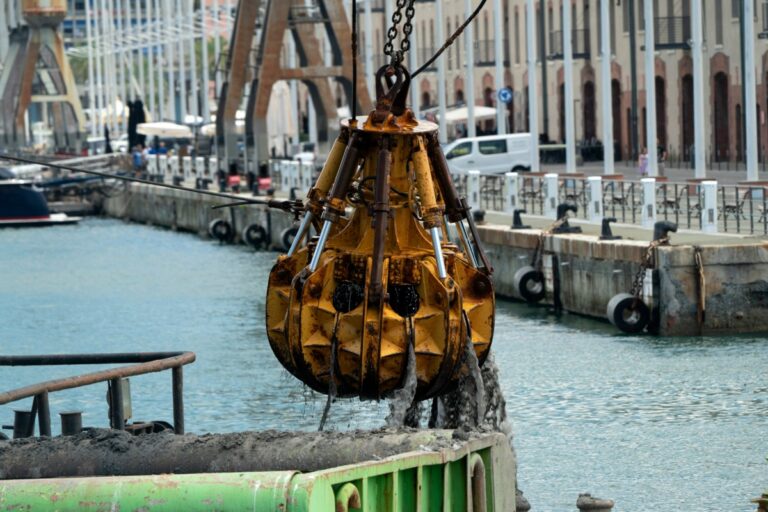
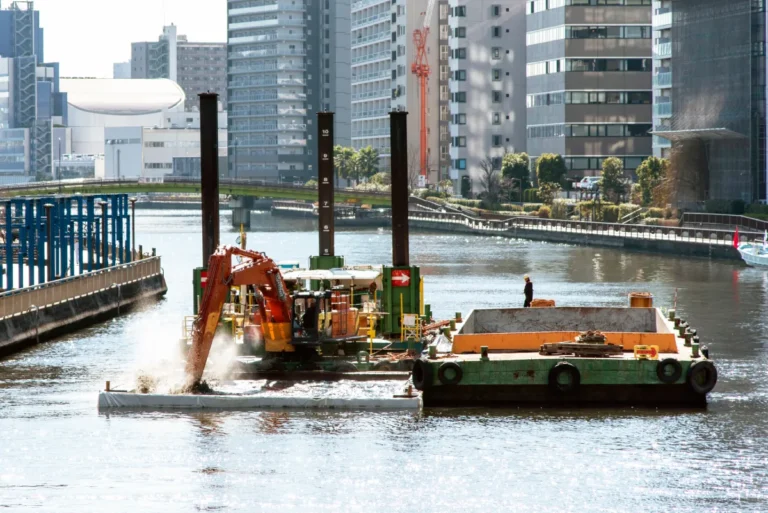
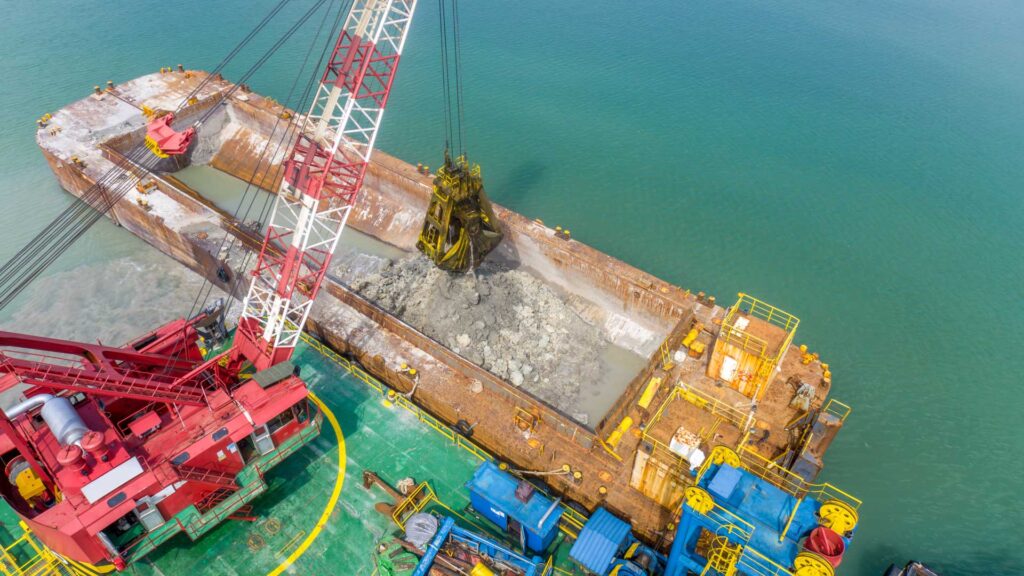
Mechanical dredging uses equipment such as clamshell buckets and backhoes to remove sediment with precision. This is often the technique of choice in areas with limited maneuvering space, such as waterfront terminals, piers, and industrial slips.
Many of these sites contain debris or coarse materials that hydraulic pumps cannot process efficiently. Mechanical dredging provides the control needed for accurate excavation, making it a core element of harbor maintenance dredging throughout New York Harbor.
Dewatering and Sediment Processing
Once sediments are removed, they are often dewatered to reduce volume and weight. Engineers may use geotextile tubes, mechanical presses, or settling basins depending on the sediment type. Dewatered material is easier to transport and sometimes suitable for beneficial reuse.
This process supports long-term management of harbor sedimentation by reducing disposal costs and environmental impact. In some cases, treated sediment may be used for environmental restoration projects in nearby wetlands or coastal resilience programs.
Environmental Protection Measures
New York Harbor is surrounded by ecologically sensitive zones, including portions of Jamaica Bay and the Hudson River Estuary. Dredging in these areas requires special attention to water quality and ecological impact. Engineers implement turbidity controls, real-time monitoring, and restricted work schedules during sensitive seasons.
These practices ensure that dredging in New York Harbor aligns with state and federal environmental requirements while sustaining critical navigation functions.
Modeling, Monitoring, and the Future of Predictive Maintenance
Hydrodynamic Forecasting Tools
Advanced modeling tools help engineers visualize how sediment will behave during different tidal cycles or storm conditions. These models integrate real-time sensor data from around the harbor. Such predictive tools help schedule dredging operations before channel depth issues become severe.
The use of forecasting technology enhances harbor maintenance dredging, supporting a proactive rather than a reactive approach.
Real-Time Operational Monitoring
Modern dredging equipment uses sensors, GPS systems, and GIS platforms to maintain accuracy. Operators continuously monitor dredge head position, sediment weight, and turbidity levels. This reduces the likelihood of over-dredging and ensures that operations remain within regulatory limits.
As technology continues to advance, real-time monitoring will play an increasingly important role in harbor sedimentation management, enhancing precision and accountability.
Regional Impacts and Case-Based Insights
New York Harbor encompasses a highly varied environment, each with its own sediment challenges. Areas such as the Upper Bay often experience accumulation of fine silt due to mixing from the Hudson River. Kill Van Kull, with heavy commercial traffic, sees repeated scouring and redeposition. Gowanus Bay receives large volumes of material from stormwater systems and surrounding urban development. Ambrose Channel accumulates significant ocean-driven sand deposits that affect deep-draft vessels.
Understanding these regional nuances is essential to the consistent and effective execution of New York Harbor dredging programs.
Why New York Dredge Services Excels in Harbor Sedimentation Control
Local Expertise and Specialized Knowledge
The sedimentation patterns of New York Harbor require a company that understands not only dredging technology but also the region’s geographic and operational realities. New York Dredge Services has spent years working with the unique hydrodynamic conditions around Staten Island, the Hudson River entrance, and the harbor’s commercial terminals. This experience enables the company to develop precise, practical solutions tailored to this environment.
Customized Engineering Solutions
New York’s waterways require adaptable strategies. New York Dredge Services integrates multiple approaches, including high-efficiency hydraulic dredging, precise mechanical excavation, advanced surveying systems, and sediment dewatering processes. These solutions work together to support reliable, environmentally responsible harbor maintenance dredging tailored to each site.
Commitment to Environmental Protection
Working near sensitive ecological areas requires strict care and compliance. New York Dredge Services uses environmentally friendly dredge heads, real-time monitoring tools, and water-quality management techniques to minimize environmental impact. This commitment supports responsible management of harbor sedimentation and aligns with environmental standards across New York and New Jersey.
Ensuring Navigational Reliability
The company’s mission includes maintaining safe depths, supporting port operations, and ensuring efficient maritime traffic. By combining accurate predictive modeling with targeted dredging operations, New York Dredge Services provides dependable results that strengthen the harbor’s long-term operational resilience. Their dedication to high-quality New York Harbor dredging keeps the harbor functioning smoothly despite continual sedimentation challenges.
Conclusion
Sediment accumulation in New York Harbor is a natural and unavoidable process influenced by river flows, coastal currents, storms, climate conditions, and urban activity. Managing this dynamic system requires technical depth, strategic thinking, and operational expertise. Effective New York Harbor dredging depends on a clear understanding of sediment behavior, comprehensive hydrographic data, accurate predictive modeling, and advanced dredging technologies suited to the region’s complex conditions.
Routine harbor maintenance dredging supports safe navigation, efficient commerce, and reliable maritime transport across the region. As climate and tidal conditions evolve, the need for strategic, resilient management of harbor sedimentation becomes increasingly critical. With specialized local knowledge, innovative tools, and a strong commitment to environmental responsibility, New York Dredge Services stands at the forefront of dredging excellence in the region.
Their work helps ensure that New York Harbor remains operational, resilient, and capable of supporting one of the busiest maritime gateways in the United States. For organizations seeking a reliable partner to address sedimentation challenges, New York Dredge Services provides the expertise to maintain safe, efficient waterways that support the harbor’s long-term future.